

Caroline Reidy is Head of HR Solutions at NFP and a HR and Employment Law Specialist. Caroline sold her company, The HR Suite, in 2025 to NFP, an AON Company, and as of 17th November 2025 The HR Suite officially rebranded to NFP.
Caroline is a former member of the Low Pay Commission and is also an adjudicator in the Workplace Relations Commission. Caroline is also an independent expert observer appointed by the European Parliament to the Board of Eurofound. Caroline is also on the Board of the Design and Craft Council Ireland and is a Governor on the Board of Munster Technology University.
She has also completed a Master's in Human Resources at the University of Limerick, and she is CIPD accredited as well as being a trained mediator. Caroline completed her diploma in Company direction from the IOD with a Distinction and completed her assessment to become a Chartered Director of the IOD. Caroline had worked across various areas of HR for over 25 years in Kerry Group and in the retail and hospitality sector, where she was the Operations and HR Director of the Garvey Group prior to setting up The HR Suite in 2009.
She has also written 2 books, has done a TEDx and is a regular conference speaker and contributor to national media and is recognised as a thought leader in the area of HR and employment law. Caroline also mentored female entrepreneurs on the Acorns Programme. Originally from Ballyheigue, Co. Kerry, now living in Dublin, is very proud of her Kerry roots.
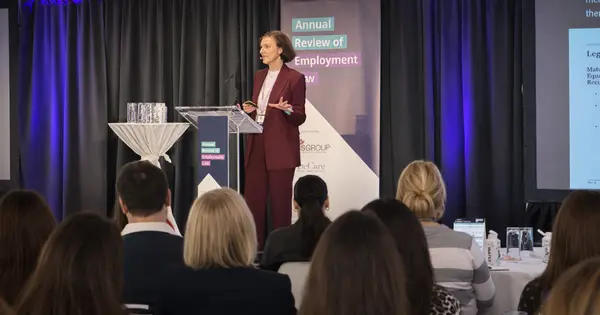
The economic environment can be unpredictable for various reasons such as changing trends, reduced disposable income for households as well as global uncertainty. In Ireland we have seen may closures in many sectors in recent years.
Some employers may need to restructure or close their business which could mean that roles become redundant. This is one of the most challenging areas for employers both from a financial and personal perspective.
Redundancy
Redundancy is a legitimate ground for terminating employment; however, except in cases involving the closure of a business, it can present significant legal and employee relations risks. Employers must therefore ensure that any redundancy situation is genuine and that a fair and transparent process is followed throughout.
Where an employer relies on redundancy as the reason for dismissal, but the role continues to exist, or the employee is effectively being replaced, the dismissal may be challenged under the Unfair Dismissals Acts 1977–2015.
Under the Unfair Dismissals Acts, all dismissals are presumed to be unfair unless the employer can demonstrate otherwise.
While redundancy is one of the recognised fair grounds for dismissal, it must be both genuine and procedurally fair. A fundamental principle is that redundancy relates to the position itself rather than the individual occupying it.
Employers must therefore do more than simply identify roles that may be affected. They should ensure that employees are fully informed and consulted throughout the process and that decisions are made in an objective and transparent manner.
Key considerations include:
• Ensuring managers understand and apply the organisation's redundancy procedures consistently.
• Consulting meaningfully with affected employees.
• Applying clear, objective and measurable selection criteria where selection is required.
• Exploring alternatives to redundancy where possible.
• Maintaining comprehensive records of all meetings, communications and decisions throughout the process.
Even where a genuine redundancy situation exists, a failure to follow fair procedures can result in a successful unfair dismissal claim. Such claims can lead to significant financial liability, management time, reputational damage and employee relations issues.
Recent Redundancy Reforms
The Employment (Collective Redundancies and Miscellaneous Provisions) and Companies (Amendment) Act 2024 came into effect on 1 July 2024. The legislation was introduced in response to high-profile insolvency cases, including Debenhams and Clerys, where employees were made redundant with limited consultation and information.
The Act strengthens employee protections by requiring employers, including those involved in insolvency situations, to engage in a minimum consultation period of 30 days and provide employee representatives with all relevant information relating to the proposed redundancies.
Caselaw
There are numerous examples of case law which reinforce and reminds us of the importance of fair process for redundancy. One such example is below.
Gary Rooney, a senior employee at Twitter/X’s European headquarters in Dublin, was awarded over €550,000 after being unfairly dismissed. Rooney did not respond to an email from Elon Musk requiring staff to commit to an "extremely hardcore" work ethic. His lack of response was interpreted as a resignation, leading to his dismissal. The WRC found that this constituted an unfair dismissal.
This and other cases demonstrate how failing to explore alternatives or to apply a fair selection process can lead to large awards for unfair dismissal. Employers must also remain mindful of their obligations under the Protection of Employment Act 1977, particularly in cases of collective redundancy.
Where redundancies are unavoidable, a fair, transparent and thoroughly documented process is essential. Adhering to best practice not only reduces legal risk but also demonstrates a commitment to treating employees with dignity and respect during periods of organisational change.
Best Practice for Employers During Redundancy
To reduce the likelihood of unfair dismissal claims arising from a redundancy exercise, employers should ensure that the process is carefully planned, objectively managed and conducted in accordance with both legal requirements and best practice principles. This includes clearly identifying the business reasons for the proposed redundancies, establishing a fair selection methodology and implementing a consistent approach to employee communications.
Meaningful consultation is a critical element of any redundancy process. While consultation is a statutory requirement in collective redundancy situations, employers should also consider adopting this approach in individual or smaller-scale redundancies. Providing employees with an opportunity to understand the rationale for the proposals, ask questions and put forward suggestions can help demonstrate procedural fairness.
Any selection criteria used should be objective, transparent and capable of withstanding scrutiny. Criteria should be based on measurable factors such as skills, qualifications, performance and experience, with care taken to ensure that decisions are not influenced by subjective considerations or discriminatory factors.
Before confirming redundancies, employers should also consider whether suitable alternatives exist, including redeployment opportunities, revised working arrangements or reductions in working hours. Exploring these options can help demonstrate that redundancy was genuinely a last resort.
Comprehensive record-keeping is equally important throughout the process. Employers should retain detailed documentation relating to consultations, selection assessments, communications, alternative options considered and any feedback received from employees.
This article was written by Caroline Reidy, Head of NFP HR Solutions Ireland Limited, HR and Employment Law Specialist
For more information on the NFP HR Solutions Ireland Limited:
Telephone: (066)7102887 (Head Office)
Email: hrsolutions@nfpireland.ie
Visit: https://nfpireland.ie