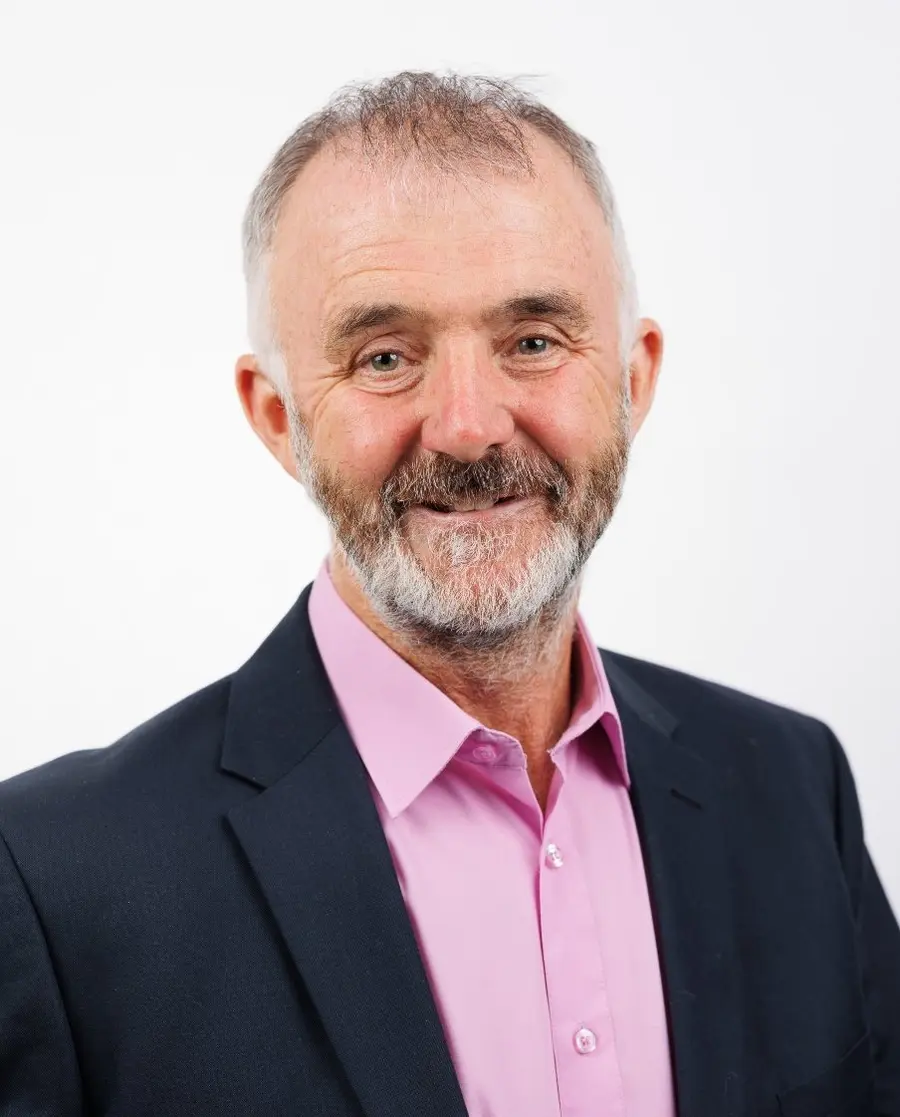

Barry Phillips (CEO) BEM founded Legal Island in 1998. He is a qualified barrister, trainer, coach, and meditator, and a regular speaker here in the UK and Ireland, and abroad.
Barry has completed the Oxford University course “Leading AI Implementation” in June 2026. He has trained hundreds of HR Professionals on how to use GenAI in the workplace and is the author of the book “ChatGPT in HR – A Practical Guide for Employers and HR Professionals”


This week Barry Phillips notes that the world’s biggest law firm plans to use AI to bottle its lawyers' genius. He asks what does this mean for the people inside?
Transcript:
Hello Humans
And welcome to the weekly podcast that aims to review an important AI development relevant to the world of HR in around five minutes. My name is Barry Phillips
This week's topic is all about how HR might one day be able to really capture the value of its workforce and I want to get there by way of a law firm, a mad-scientist movie, and an awful lot of money.
According to the Financial Times last week, Kirkland & Ellis, the world's highest-grossing law firm, is planning to spend five hundred million dollars building its own AI platform. Roughly a hundred million this year, and hundreds of millions more over the next three or four. Their chair, Jon Ballis, put it like this: the firm wants to "take the collective intelligence of our institution and be able to deploy that throughout our firm."
Now, when I first read that line, my mind went straight to Carry On Screaming. I pictured the senior partners wheeled into a basement laboratory, wired up to some crackling high-voltage contraption, their legal genius drawn out in glowing arcs and decanted, ready for the juniors. Frankenstein…but billable.
Then I remembered how these things actually work. The platform is being trained on the knowledge of around two hundred and fifty Kirkland lawyers - their memos, their precedents, their presentations, their hard-won expertise. No electrodes required.
It's an interesting moment, because we have been here before. Back in 2023, Bloomberg unveiled BloombergGPT. This was a huge AI model trained on its own vast archive of financial data. The logic was impeccable: who, after all, knows finance better than Bloomberg? And yet within a year, the general-purpose models - your ChatGPTs and the like, had largely caught up, and the case for building your own bespoke model started to look like an expensive mistake.
And here is where this stops being a story about lawyers and becomes a story for everyone in HR.
Because strip away the legal jargon, and what Kirkland is really doing is the boldest piece of people-strategy you will see this year. They are taking the tacit knowledge that lives in their best employees' heads - the stuff that usually walks out of the door at five-thirty, or retires, or gets poached by a rival and turning it into an asset the whole organisation can draw on. That isn't an IT project. That's succession planning, onboarding and knowledge management, all wearing a very expensive new coat.
So here's the thought I'll leave you with. For decades, HR has quietly run on a contradiction: we call people our greatest asset, and then we build organisations that mislay that asset every time someone hands in their notice. A brilliant lawyer, a brilliant nurse, a brilliant engineer leaves and thirty years of judgement leaves with them, and we shrug and call it "natural turnover." What firms like Kirkland are betting half a billion dollars on is that this no longer has to be true and that institutional memory can outlive the individual. It is a dazzling promise one that may be realised much sooner than we all think.
As always, thank you for listening.
Until next week, bye for now.
 Get the Most from Copilot (Level 1): A Practical Guide for HR