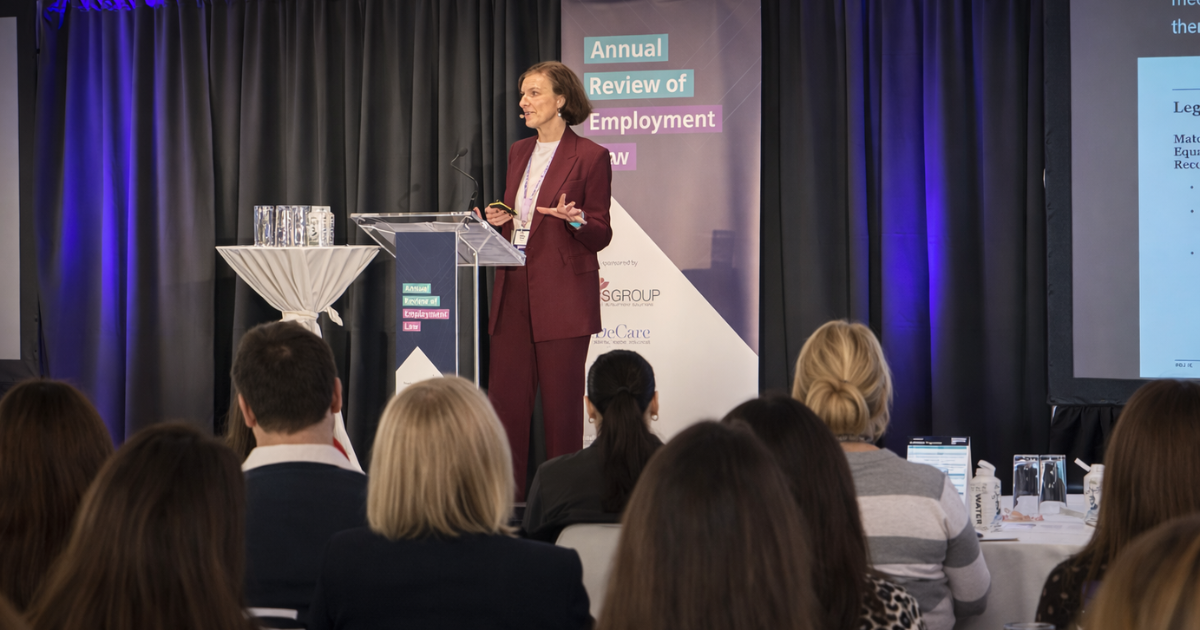

Isabelle is a Solicitor practising as part of the firm’s Employment team. She has experience in both contentious and non-contentious aspects of employment law including claims for unfair dismissal, equality and discrimination, redundancy, and protected disclosures.
Isabelle also provides advice on grievances, bullying and harassment investigations, and disciplinary and performance issues. She has experience in the defence of claims before the Workplace Relations Commission, the Labour Court and the Courts.



Leah is a Solicitor, practising as part of the firm’s Employment team. Having trained with RDJ, she has gained experience across the firm’s main practice areas including litigation & dispute resolution and corporate & commercial before specialising in employment law. Leah has already demonstrated a strong commitment to advocating for employers and navigating the complexities of the employment law landscape with insight.
Leah advises employers across various sectors, on both contentious and non-contentious aspects of employment law. Leah regularly reviews contracts of employment, company handbooks, policies and procedures and tailors them to meet the specific needs of RDJ clients. Leah has experience in the defence of claims before the Workplace Relations Commission, the Labour Court and the Courts. Leah is a contributor to Legal Island and regularly publishes RDJ Insights on employment law issues.
It is estimated that as many as 15-20% of the global population could have some form of neurodivergence. Neurodivergence is an umbrella term that typically includes autistic spectrum disorder (ASD), attention-deficit hyperactivity disorder (ADHD) and specific learning disorders (SLD), sometimes referred to as ‘dyslexia’.
Employers wondering how they can support neurodivergent employees and encountering requests for reasonable accommodation for the first time may face new and unfamiliar challenges. Unfortunately, it is not always obvious what this means in practice and what an employer’s obligations are. In this article, we look at how and why it is crucial for employers to ensure reasonable accommodations are considered and put in place for those employees who need them.
The Law
Under Irish
Continue reading
We help hundreds of people like you understand how the latest changes in employment law impact your business.
Please log in to view the full article.
What you'll get:
- Help understand the ramifications of each important case from NI, GB and Europe
- Ensure your organisation's policies and procedures are fully compliant with NI law
- 24/7 access to all the content in the Legal Island Vault for research case law and HR issues
- Receive free preliminary advice on workplace issues from the employment team
Already a subscriber? Log in now or start a free trial