

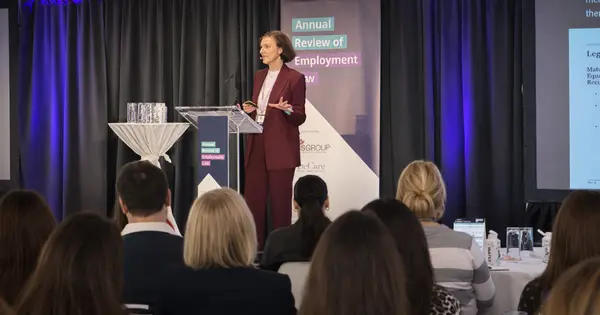
Caroline Reidy is Head of HR Solutions at NFP and a HR and Employment Law Specialist. Caroline sold her company, The HR Suite, in 2025 to NFP, an AON Company, and as of 17th November 2025 The HR Suite officially rebranded to NFP.
Caroline is a former member of the Low Pay Commission and is also an adjudicator in the Workplace Relations Commission. Caroline is also an independent expert observer appointed by the European Parliament to the Board of Eurofound. Caroline is also on the Board of the Design and Craft Council Ireland and is a Governor on the Board of Munster Technology University.
She has also completed a Master's in Human Resources at the University of Limerick, and she is CIPD accredited as well as being a trained mediator. Caroline completed her diploma in Company direction from the IOD with a Distinction and completed her assessment to become a Chartered Director of the IOD. Caroline had worked across various areas of HR for over 25 years in Kerry Group and in the retail and hospitality sector, where she was the Operations and HR Director of the Garvey Group prior to setting up The HR Suite in 2009.
She has also written 2 books, has done a TEDx and is a regular conference speaker and contributor to national media and is recognised as a thought leader in the area of HR and employment law. Caroline also mentored female entrepreneurs on the Acorns Programme. Originally from Ballyheigue, Co. Kerry, now living in Dublin, is very proud of her Kerry roots.
Performance appraisals are one of those HR processes that everyone recognises, yet many organisations still struggle to get real value from. At their best, they offer a structured, supportive space for meaningful conversations about performance, growth, and expectations. At their worst, they become an annual tick-box exercise that leaves everyone a little frustrated.
When done well, an appraisal is a two-way conversation where the manager and employee can openly discuss the role, progress, challenges, and longer-term goals. It’s an opportunity to pause, reflect, and jointly look at what’s working and what needs attention. For employees, it provides clarity and recognition; for managers, it strengthens relationships and helps guide development; for the organisation, it supports alignment, accountability, and capability building.
Start With Last Year’s Objectives
A good appraisal begins with revisiting the objectives set at the previous review. The core questions are simple: What went well? Where were the challenges? What needs to change? Even where goals haven’t been achieved, the focus should be on understanding the “why” rather than assigning blame. Circumstances shift, organisational priorities evolve, and sometimes barriers emerge that are outside an employee’s control.
The appraisal conversation should explore whether goals can still be achieved, whether they need to be adjusted, or whether new priorities now make more sense. This reflective approach helps keep objectives relevant and ensures that employees feel part of the solution rather than the subject of scrutiny.
Consistency Matters
Appraisals should follow a clear and consistent process. Employees must receive adequate notice and be given the relevant form or template in advance. Completing a self-assessment encourages employees to pause and consider their performance, strengths, and development areas. It also helps balance the conversation, as both parties come prepared with their own reflections.
Once completed, the form should be reviewed by the appraiser. Whether the meeting happens in person or virtually, the same principles apply: fairness, honesty, and balance. The manager’s assessment should be finalised during or after the discussion, incorporating the employee’s perspective. This ensures that the document reflects a shared understanding rather than a one-sided view.
An effective appraisal should end with clear, realistic goals for the months ahead. These goals must be agreed, not imposed, and should be specific enough to guide performance without boxing the employee in. When objectives are genuinely co-created, employees tend to feel far more ownership and motivation.
Why Appraisals Still Matter
While some organisations have experimented with fully replacing annual reviews with continuous feedback-only models, the reality for most workplaces is that people benefit from a structured checkpoint. A well-run appraisal creates a moment to step back from the day-to-day and focus on development, expectations, and the broader picture.
Some of the key benefits include:
- Constructive, future-focused feedback. Managers can outline what’s going well, where improvements are needed, and why certain expectations exist.
- Clarity on goals and priorities. Employees understand what they are working towards and how their role connects to the wider organisational context.
- A chance to identify training and development needs. This aligns organisational investment with real performance gaps or aspirations.
- Improved motivation and engagement. Feeling recognised and having a voice in the process builds commitment and confidence.
- Better self-awareness. The act of reflecting on oneself - strengths, challenges and habits - can be powerful in shaping professional behaviours.
Importantly, goals should make sense to the employee. If expectations shift significantly from previous years, it’s vital to explain the rationale. Employees may be asked to take on new responsibilities or stretch into areas outside their usual remit, and without context, this can feel unfair. However, with clarity and support, it can feel more like an opportunity.
Skills Every Appraiser Needs
The quality of an appraisal ultimately depends on the capability of the manager conducting it. They need the confidence to ask the right questions, give meaningful feedback, and create a safe environment for honest conversation.
Probing questions help deepen understanding and get beyond surface-level responses. Skilled appraisers listen more than they speak, pick up on cues, and explore issues without being defensive or dismissive.
A strong appraisal conversation typically shows:
• Recognition of success
• Reflection on past performance
• Balanced, active listening
• Open and honest communication
• Clear action points and agreed goals
A Once-a-Year Meeting Is Not Enough
The appraisal should never be the first time a manager gives feedback or discusses performance concerns. Equally, it shouldn’t be the only time achievements are acknowledged.
Performance management is an ongoing cycle. Regular check-ins, informal catch-ups, and timely feedback are what truly drive improvement. The annual appraisal is simply a structured milestone in a much broader relationship.
Ultimately, effective performance management is rooted in consistent communication, fairness, and a genuine interest in helping people grow. When organisations invest in building strong appraisal habits, they get the best from their people and employees feel supported, recognised, and clear on where they’re going.
For more information on the HR Suite:
Telephone: (066)7102887 (Head Office)
Visit https://thehrsuite.com
Continue reading
We help hundreds of people like you understand how the latest changes in employment law impact your business.
Please log in to view the full article.
What you'll get:
- Help understand the ramifications of each important case from NI, GB and Europe
- Ensure your organisation's policies and procedures are fully compliant with NI law
- 24/7 access to all the content in the Legal Island Vault for research case law and HR issues
- Receive free preliminary advice on workplace issues from the employment team
Already a subscriber? Log in now or start a free trial