
Christine, Julie, and Laura - known as the Knowledge Team - bring extensive expertise in employment law, HR, and learning & development. With diverse backgrounds spanning top-tier law firms, in-house roles, and voluntary organisations across the UK and Ireland, they provide informed and strategic support on employment matters.
Our team includes qualified (now non-practising) employment solicitors with experience in both legal and corporate sectors, alongside an experienced HR professional and CIPD Associate Member, ensuring a well-rounded approach to workplace challenges.

One week into the World Cup and Scotland have drunk Boston dry. Productivity? We'll check back in July........... Welcome to the Friday Round-up! ⚽
Top 5 reads for busy people:
- Employment (Contractual Retirement Ages) Act 2025: what is changing ⚖️
- AI Regulation Bill 2026 published: key updates 🤖
- Revenue ramps up compliance checks 📊
- Calls to improve paternity leave supports 👶
- Blog: unfair dismissal awards, key WRC and Labour Court decisions 🧑⚖️
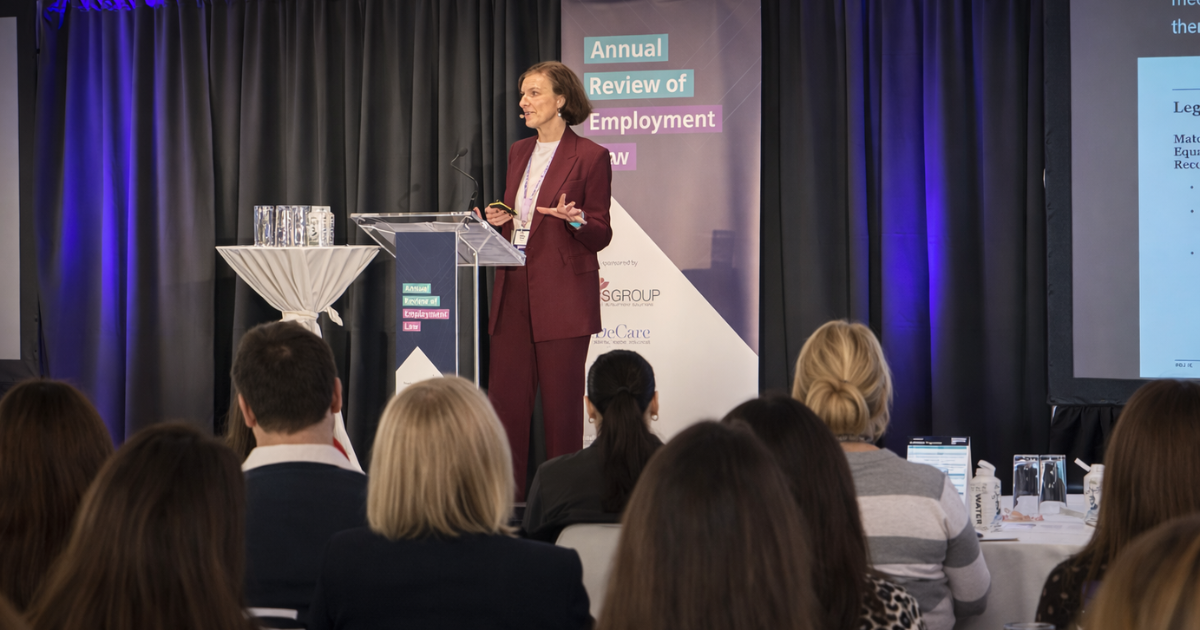
And in other news… our Annual Review of Employment Law is back, turning all those headline grabbing legal changes into plain English before they turn up uninvited in your inbox, with top legal minds and sharp HR insight in Dublin or online on 26th Nov. First 7 sessions are now live ⚖️
CONTENTS ⚓︎
1. Case Law Reviews ⚓︎
Lorna Healy v Berkshire Hathaway European Insurance ADJ-00064687
Summary: Wrong employer named, WRC lacked jurisdiction to proceed.
Practical Guidance for Employers:
Employers should:
- Ensure that contracts, payslips, handbooks and HR correspondence consistently identify the correct legal employer. This is particularly important in group structures, retail concessions, multinational subsidiaries and businesses using trading names. Where employees interact with a brand or group company, but are legally employed by another entity, the documentary trail should remove any ambiguity.
- Note that where a WRC complaint is issued against the wrong entity, employers should consider raising a preliminary objection at the earliest opportunity. If the named Respondent is not the legal employer, and if the correct entity is not identified on the complaint form, the employer may argue that the WRC lacks jurisdiction. The objection is strongest where the employee’s own contract and payslips clearly name a different legal employer, and where the error is not merely typographical.
- Avoid inadvertently consenting to substitution or amendment. Correspondence should make clear, where appropriate, that any participation is without prejudice to the jurisdictional objection.
Read the full Review here.
Serene Itani v Day-Today Ashbourne ADJ-00063950
Summary: Wages were owed despite missing payroll documentation.
Practical Guidance for Employers:
Employers should:
- Complete right-to-work, age verification, PPS, payroll, and identity checks before allowing any person to begin work, training, or a trial shift. Where documentation is required for tax, payroll, or legal compliance, this should be explained clearly before the person starts.
- Be cautious about unpaid trials and unpaid training. Where a person performs work of value for the business, particularly where they attend the workplace, carry out duties, or work alongside staff, payment obligations are likely to arise. Any trial period should be short, clearly defined, genuinely observational or assessment-based, and documented.
- Ensure that wages are processed lawfully and on time. Payment through payroll is best practice, but payroll difficulties do not remove the obligation to pay for work done. Small businesses should have simple onboarding checklists, written trial arrangements, and clear wage records to avoid disputes.
Read the full Review here.
These case reviews were written by Patrick Barrett BL.
Patrick's legal education is robust, beginning with a BCL Law Degree from University College Cork (2012-2016), followed by an LL.M in Business Law from the same institution (2016-2017), and culminating in a Barrister-at-Law Degree from The Honorable Society of King’s Inns in Dublin (2019-2021). He has extensive experience on the South-West Circuit, handling Civil, Family, and Criminal Law cases, as well as advising the Citizen Advice Service. He has worked as an employment consultant, dealing with workplace investigations and bankruptcy procedures.
Remember: Our Irish case law reviews are now held in our case law section on our fully-searchable employment law hub website.
2. AI & Employment Law ⚓︎
Publication of the Regulation of Artificial Intelligence Bill 2026
Minister for Enterprise, Tourism and Employment, Peter Burke and Minister of State for Trade Promotion, Artificial Intelligence and Digital Transformation, Niamh Smyth have welcomed the Government’s approval to publish the Regulation of Artificial Intelligence Bill 2026. The Bill, once enacted, will give effect in Ireland to the EU Artificial Intelligence Act — Regulation (EU) 2024/1689, establishing the domestic enforcement architecture necessary to ensure the world's first comprehensive AI regulatory framework operates fully and effectively in this State. The Bill establishes Oifig IS na hÉireann (AI Office of Ireland) as an independent statutory body which will act as Ireland's central coordinating authority for the implementation of the AI Act. Read here.
Demand for workers with skills in AI rose 83pc since 2019, new PwC report finds
Demand for workers with AI skills has risen 83pc in Ireland since 2019, according to new research from PwC. The report found hiring for AI-skilled workers has grown far faster than the wider jobs market, which expanded by 16pc over the same period. Nore from the Irish Independent. More here.
And here’s the press release from PWC.
Updated guidance on AI use in workplace litigation: What employers need to know
Mason, Hayes & Curran‘s Employment Law & Benefits team reviews the recent guidance published by the WRC, Labour Court and Court of Appeal on the use of AI in preparing for litigation. In this article, they provide an overview of what employers and HR representatives need to know. More here.
AI for HR Weekly Podcast with Barry Phillips 🎙️
Hub subscribers are beginning to request that our Chairman, Barry covers a particular AI topic in a future podcast. If you have a request, send it to him directly at barry@legal-island.com - he’ll feel like a DJ from the 80s…...🎧
You can tune into the latest episode right here - or, if you’re on the move, why not take us with you?
Listen on all major platforms: 🎧 Spotify or Apple Podcasts
Simply search for “AI for HR Weekly Podcast” and enjoy expert insights anytime, anywhere.
3. Budget ⚓︎
Ministers, trade unions and employers to discuss Budget priorities
The Coalition has billed the event 'Reforming now for a secure future' and says it will focus on taking actions following its recent long-term forecast, which highlighted expected economic challenges between now and 2065. But immediate cost pressures caused by inflation and rising energy prices will be a high priority as Budget preparations get under way. RTÉ has more.
4. Contractual Retirement Ages ⚓︎
Employment (Contractual Retirement Ages) Act 2025: What is changing
The Employment (Contractual Retirement Ages) Act 2025 creates a new employment right that allows eligible employees to notify their employer that they do not consent to retire at the contractual retirement age where this is lower than the State pension age of 66. Employees are not obliged to remain in employment beyond their contractual retirement age if they do not wish to do so. Employers must consider any notifications received under the 2025 Act. This new law creates a higher legal threshold for employers if they propose to enforce the contractual retirement age. The Act comes into force from 29 June 2026. More on this here.
Unions welcome strengthening of workers’ rights on retirement age
The Irish Congress of Trade Unions has welcomed the signing of the commencement order for the Employment (Contractual Retirement Ages) Act 2025 by Minister Peter Burke, which comes into effect from Monday 29 June, and the publication of an updated Code of Practice on Longer Working. The new law strengthens workers’ right to keep their job for employees with a mandatory retirement age below 66 in their employment contract. While the Act only applies to an extension up to age 66, it does not offset a worker's existing right to claim that forced retirement beyond 66 is discriminatory on grounds of age under the Employment Equality Acts. Read in full.
You can also check out the article on our Employment Law Hub from Lewis Silkin.
5. Paternity Leave ⚓︎
Government urged to review paternity leave supports
Men's health charity Movember has called for reforms of paternity leave in Ireland and is appealing to the Government to establish a Paternity Leave Working Group to examine key barriers and opportunities, including length of paternity leave, payment rates and workplace culture. The State paternity benefit is currently €299 per week, for two weeks, which must be taken consecutively. A new report from Movember has found that fathers in Ireland are losing out on three-quarters of weekly average income when they take State paternity leave. RTÉ has more on this.
Back to Top
6. Data Protection and Cybersecurity ⚓︎
HSE fined €300k over data breach at Midland Regional Hospital Tullamore
RTÉ reports the Health Service Executive has been fined €300,000 by the Data Protection Commission (DPC) over a data breach at the Midland Regional Hospital, Tullamore. The DPC launched an investigation following a ransomware attack on the laboratory information system in the hospital. The HSE estimated that the personal data of around 84,000 people was affected. Read it here.
You can read the full decision from the DPC here.
Cyberattacks costing Irish SMEs €3.4bn annually
Cyberattacks are costing Irish small and medium-sized enterprises (SMEs) up to €3.4 billion annually, according to new research. The Hidden Cost of Cyber Risk report from eir Business was supported by Microsoft and the Kemmy Business School at the University of Limerick.It found that the greatest impact on businesses is not from major one-off cyber breaches but rather repeated day-to-day disruption. RTÉ has more.
And…
Majority of Irish adults back ban on public sector cyber ransoms
According to research commissioned by tech firm Ekco Security, a survey of 1,000 adults across Ireland by Censuswide found that 69% support a ban on ransom payments in an effort to deter attacks on critical national services. Ekco’s research found that consumers say they trust the healthcare sector the least (17%) to protect their personal data, followed by the sales, media, and marketing (15%) and finance sectors (11%). More here from Think Business.
Back to Top
7. Revenue Compliance Checks ⚓︎
Revenue Intensifies Compliance Checks on Enhanced Reporting Requirements
Ireland’s Enhanced Reporting Requirements (ERR) mandate that employers in Ireland report nontaxable payments made to employees and directors in real-time. Revenue has formally escalated its enforcement of ERR submissions since the start of 2026, making it a core component of standard PAYE risk assessments. BDO has more here.
8. Just In Case You Missed It...... ⚓︎
The Employment Law Hub is a comprehensive, jurisdiction-specific resource designed for HR professionals, legal advisors, and business leaders. It centralises essential employment law and HR updates, expertly curated and written by leading HR and legal specialists to provide reliable, practical, and authoritative insights. We have over 700+ in depth articles and 1000+ case law reviews. As a subscriber, you have access to all of this. Check it out the full Hub here and below are some recent articles you may have missed.....
Redundancy: challenging times for employers
The economic environment can be unpredictable for various reasons such as changing trends, reduced disposable income for households as well as global uncertainty. In Ireland we have seen may closures in many sectors in recent years.
Some employers may need to restructure or close their business which could mean that roles become redundant. This is one of the most challenging areas for employers both from a financial and personal perspective. Caroline Reidy, Head of HR Solutions, NFP sets out her guidance here.
Awards in Focus: Recent WRC and Labour Court Decisions for Unfair Dismissal
When a senior executive departs and an unfair dismissal claim follows, a question HR professionals increasingly face is "how much could this cost us?" Recent decisions from the WRC and the Labour Court offer some clarity on what counts as “remuneration” for the purposes of calculating an award of compensation under the Unfair Dismissals Acts 1997-2015 (“the UDA”). These cases also have direct implications for how employers decide to structure senior employee contracts and incentive packages. More from Sarah Linehan Employment Law Solicitor, EY Law.
9. Health & Safety Developments ⚓︎
Managers at the frontline of tackling psychosocial risks
Managers play a vital role in creating safe, healthy and supportive workplaces. A new OSHwiki article explores how managers can help prevent and manage psychosocial risks by recognising workplace risk factors, supporting open communication, involving workers and promoting good work organisation. The article from OSH News highlights that psychosocial risks should be managed like any other occupational safety and health risk: through prevention, early action and a structured approach. Acces the article here.
10. Employment News in the Media
A senior Aer Lingus manager has said that a second passage in a disciplinary investigation report, where he again seems to side with a pilot later demoted by the airline, only reads that way because he used the wrong word a second time. More from RTE.
Criminal court proceedings could face further disruption as solicitors consider escalating industrial action in a dispute over proposed changes to legal aid fees. Hundreds of cases in Dublin District Court were affected on Wednesday, the first day of a three-day withdrawal of services by criminal defence solicitors. Cases in the Central Criminal Court and Circuit Criminal Court were also adjourned after solicitors declined to undertake legal aid work, the Irish Independent reports. Irish Legal has more.
An accountant, who told a tribunal her employer of 17 years informed her she was out of a job and then “laughed” when she asked about statutory redundancy, has won more than €25,000 for unfair dismissal. Siobhán McDonagh secured the sum on foot of a complaint to the WRC against James P McCann Ireland Ltd in a decision published on Friday. More here from the Irish Times.
SIPTU representatives have condemned an attempt by Carlow College – St Patrick’s management to postpone a meeting scheduled as further evidence of the institution’s failure to adequately engage with workers’ representatives concerning the threat of mass redundancies. SIPTU Organiser, Yvonne McGrath, said: “SIPTU has called on Carlow College – St Patrick’s to immediately engage in full and transparent consultation with our Union in relation to proposed redundancies. The College management’s reliance on minimum statutory consultation thresholds and delaying the provision of essential information is undermining meaningful industrial relations and will necessitate union members considering their options. You can read the full story here.
It is estimated that thousands of court cases have had to be adjourned due to the withdrawal of legal aid work by solicitors across the country. The solicitors have withdrawn their services for the rest of the week, in all cases involving an accused person on bail, in a dispute over plans by the Department of Justice to reform solicitors' fees for legal aid work. More from RTÉ.
11. Friends of Legal Island ⚓︎
Addleshaw Goddard named Leading International Law Firm in Ireland
Addleshaw Goddard has been named leading international law firm in Ireland at the 2026 LEAP Irish Law Awards.
The firm received the newly introduced Global Excellence Award, which recognises the international law firm that has most successfully established and integrated its presence in Ireland. The award is based on an independent, market-wide assessment carried out by the judging panel and research committee. Read more in Irish Legal News.
Congratulations from Legal Island! 🎉
Legal Island is delighted to partner with Addleshaw Goddard LLP for an event in September on Preventing and Resolving Bullying and Harassment in the Workplace. Keep an eye on our events page for more announcements on this event coming soon....
12. Free Webinars This Month
Employee Data: What ROI & NI Employers Must Collect, Keep, and Delete
If you missed Crystel Robbins Rynne, CEO of HRLocker's webinar on Wednesday 3 June, you can catch up here.
Crystel walked us through the full employee journey, from job ads to post‑employment in respect of employee data. She gave real‑world insight into what you can collect, what you shouldn’t keep, and how long each record can stay on file.
Check out previous discussions:
Legal Island's Webinar & Podcasts
Enjoy the weekend!
Legal Island
Continue reading
We help hundreds of people like you understand how the latest changes in employment law impact your business.
Please log in to view the full article.
What you'll get:
- Help understand the ramifications of each important case from NI, GB and Europe
- Ensure your organisation's policies and procedures are fully compliant with NI law
- 24/7 access to all the content in the Legal Island Vault for research case law and HR issues
- Receive free preliminary advice on workplace issues from the employment team
Already a subscriber? Log in now or start a free trial