


Barry Phillips (CEO) BEM founded Legal Island in 1998. He is a qualified barrister, trainer, coach, and meditator, and a regular speaker here in the UK and Ireland, and abroad.
Barry has completed the Oxford University course “Leading AI Implementation” in June 2026. He has trained hundreds of HR Professionals on how to use GenAI in the workplace and is the author of the book “ChatGPT in HR – A Practical Guide for Employers and HR Professionals”
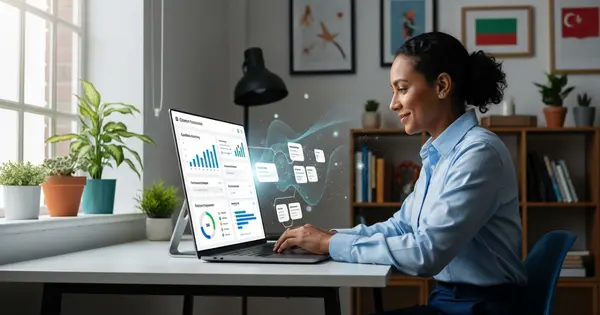


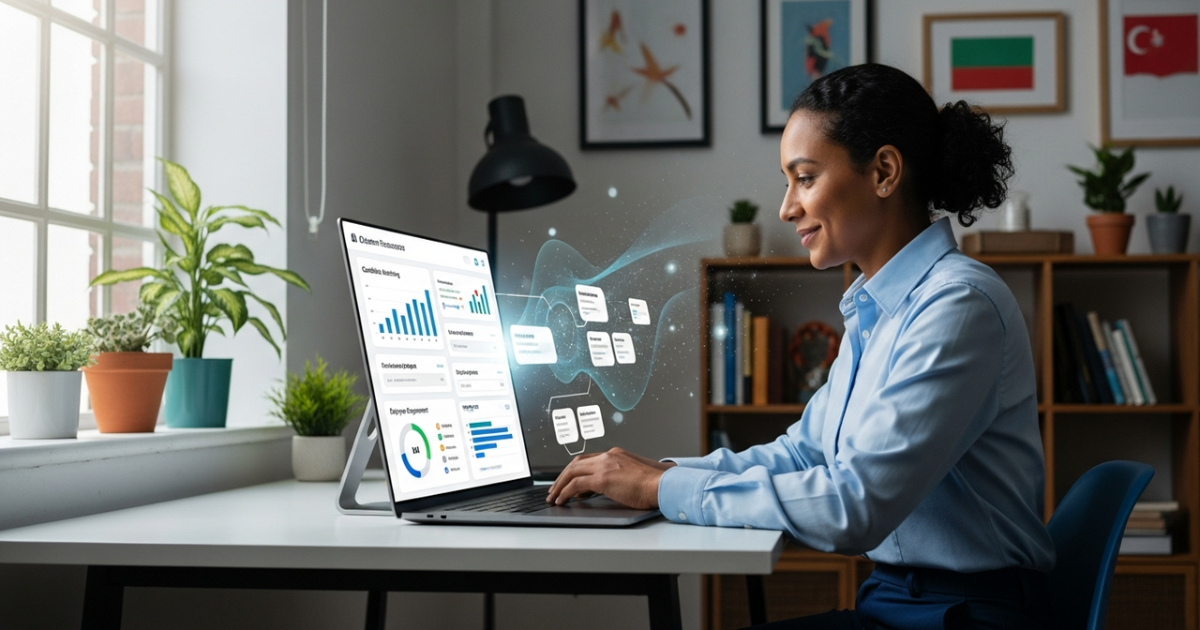
This week Barry Phillips asks whether AI avatars could end endless retakes and help HR deliver clearer, more useful, personalised messages.
Transcript:
Hello Humans!
My name is Barry Phillips, and welcome to the weekly podcast that covers an important AI development for the HR profession in around five minutes.
First, a quick disclaimer.
Legal Island has been going for almost three decades. The way we work has changed enormously in that time, but one thing hasn’t: we still cherish our independence. We’re not tied to a big law firm, an insurance company or an AI powerhouse.
Sam Altman doesn’t hand us a wad of cash every time we mention ChatGPT. If only we mattered that much to him.
So we’re free to praise something that’s genuinely useful for HR, and just as free to call something downright rubbish.
Today, I want to talk about Synthesia. And if you’re not already using it, or at least looking into it, you are missing out.
This isn’t another large language model beginning with C. Synthesia is an AI video platform. You give it a script, and a digital presenter delivers it for you.
Some of these avatars are entirely synthetic. Others are based on real actors who’ve given their consent. You can even create one of yourself.
Now, when we first came across avatars at Legal Island, the reaction in our office was… muted. The movement could look wooden. The lips and the audio didn’t always agree. And the eyes would stare just long enough to make you wonder whether your presenter might climb out of the laptop and follow you home.
Less learning and development. More Frankenstein with a staff handbook.
But the newer versions are far more convincing. And that opens up some genuinely useful possibilities.
Think about how things used to work. A three-minute announcement from HR, delivered in person on camera, could swallow half a day. You’d need someone to operate the camera, sort the lighting, maybe set up a green screen and an autocue.
And finding a volunteer was often the hardest part. We struggled to persuade even our most telegenic colleagues to step in front of the lens. When someone finally agreed, there were takes. And retakes. And retakes of the retakes.
One version sounded natural but wandered off script. Another was word-perfect but sounded like someone reading from a giant cue card.
Which, of course, they were.
With Synthesia, you pick a presenter, add your script and generate the video. Need to change the wording? Edit it and generate it again. No second filming session required.
Let’s be realistic: you still need time to write the script, check it and let the video process. I wouldn’t promise you a finished three-minute video in three minutes. But taking filming and retakes out of the equation makes a substantial difference.
So what could HR actually do with it?
Imagine a welcome message for a new starter, tailored to their team. Learning content built around someone’s specific role. A short health and safety update that has a fighting chance of holding people’s attention.
Synthesia lists more than 140 languages and accents for its standard voices. Availability is different if you’re using your own cloned voice, so check what your plan includes. Either way, that could be particularly valuable for multilingual workforces across the UK, Ireland and beyond.
And if you fancy your own digital double? The video route needs between one and five minutes of footage, recorded in one continuous take, and you’ll record your consent live. There’s now a photo option too.
A newly added addition to the platform is Syren which still in beta format. This allows you to create clips based around a whiteboard but fronted by an avatar. Older versions were awkward but this one is so much better and allows you to make changes that actually work simply by describing the change in the prompt bar.
But here’s the big question: will employees really accept the rise of avatars in the workplace?
Our own early hesitation reminds me of those first conversations about the internet. “Nobody,” people said, “will ever put their credit card details online.”
Now we book flights online while waiting for the kettle to boil.
For me, though, the real opportunity isn’t the video itself. It’s what HR does with the time it gets back.
Use that time to listen. To tackle the difficult conversations. To support people properly.
An avatar can deliver an explanation. But HR remains responsible for whether that explanation is accurate, understood and appropriate.
If we simply churn out more videos that nobody needs, we’ve just automated the noise. But if we help employees understand what really matters, and free ourselves up to be present when they need us, then we’ve made a meaningful improvement.
That’s the standard this technology should have to meet.
I’m Barry Phillips. Thanks for listening. See you next week.

 Get the Most from Copilot (Level 1): A Practical Guide for HR
 Get the Most from Copilot (Level 2): A Practical Guide for HR