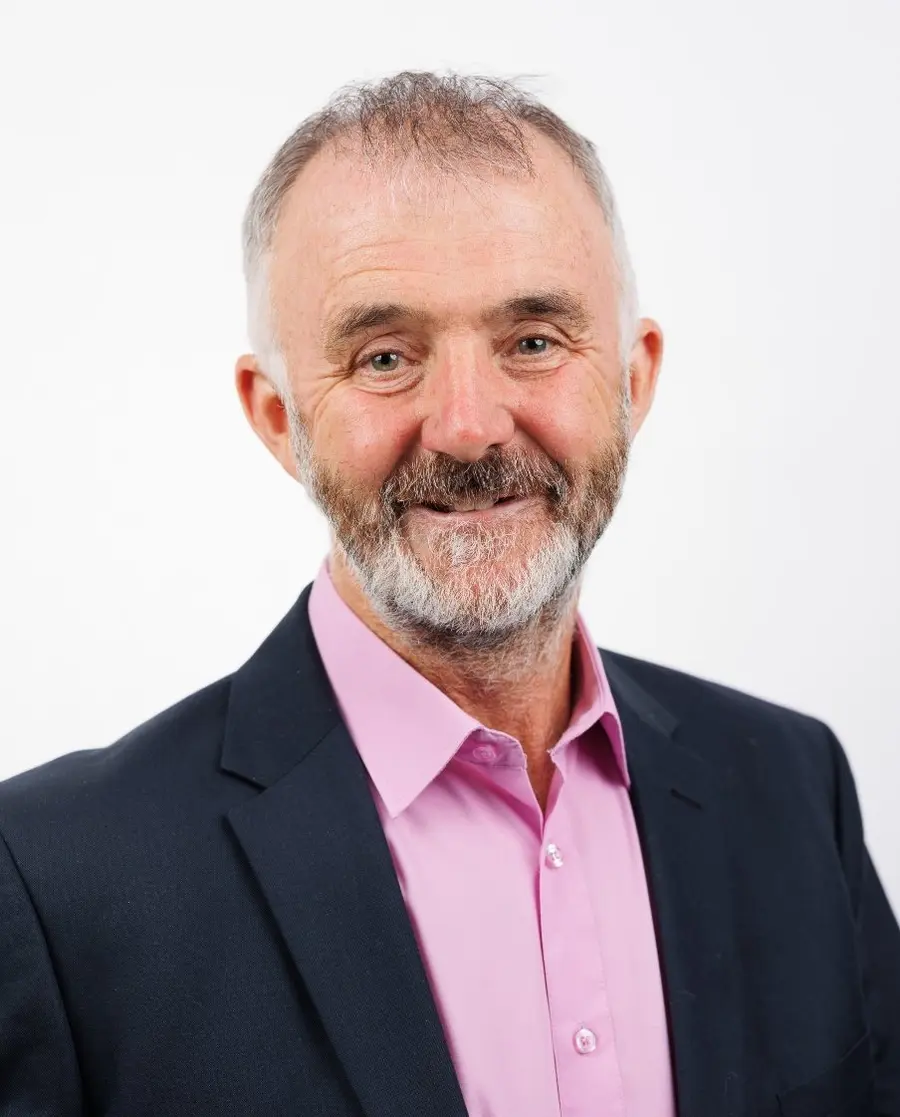

Barry Phillips (CEO) BEM founded Legal Island in 1998. He is a qualified barrister, trainer, coach, and meditator, and a regular speaker here in the UK and Ireland, and abroad.
Barry has completed the Oxford University course “Leading AI Implementation” in June 2026. He has trained hundreds of HR Professionals on how to use GenAI in the workplace and is the author of the book “ChatGPT in HR – A Practical Guide for Employers and HR Professionals”




This week Barry Phillips considers the issues for HR when one employee becomes just too important to fire.
Transcript:
Hello Humans!
My name is Barry Phillips. And welcome to the weekly podcast that aims to address a key development in AI relevant to HR in around five minutes.
This week it's about what seems to be the only AI headline at the moment. And I want to begin by asking this question:
What message does Jensen Huang's return to Nvidia send about accountability at the top of the technology industry? For British tech entrepreneur Martha Lane Fox, it's a dark, difficult one.
"It's so mucked up from every angle and in the end of course, its about money above all else," the lastminute.com co-founder told the BBC this week. "Think of the licence this gives for all kinds of behaviour."
If you've somehow missed the story, here it is in thirty seconds. On the twelfth of November, Jensen Huang resigned as chief executive of Nvidia, the company whose chips power most of the AI boom. He had admitted an affair with a woman US officials suspected of being a Chinese intelligence asset. That suspicion is unproven, and China denies it. Reports also emerged of relationships with at least one Nvidia employee.
When Huang offered to come back, the board said it had no intention of reinstating him. Then, on Monday, eleven days after he left, that same board voted unanimously to bring him back.
So, what changed? Not the facts. The investigations aren't finished. What changed was the pressure. Employees and shareholders petitioned for his return. President Trump says he spoke to the board, in his words, "directly and indirectly". And Nvidia says it received input from senior levels of the US government and is confident Huang's return poses no national security risk.
The markets loved it. Nvidia shares closed up more than thirty-one per cent, adding close to a trillion dollars in value in a single day. Employees were filmed applauding him back into the building.
Now, I'll leave the geopolitics to others. For those of us in HR, the interesting bit is what the board's statement did not say. It dealt with national security. It said the board was satisfied with Mr Huang's candour. It said nothing in public about the workplace question: a chief executive, and alleged relationships with people who work for him.
That's the question Martha Lane Fox is asking. If the boss has relationships with subordinates, can the women in that company trust that promotions are based on merit? And if the answer to misconduct depends on how much the share price needs you, what does that tell everyone else?
Every HR professional listening knows this problem, because you have a smaller version of it. The star salesperson. The brilliant surgeon. The founder. The person who is, supposedly, too valuable to lose. The Economist's verdict this week was that Nvidia has shown some companies, and some people, really are treated as too big to fail, and that this may set a template for what comes next.
And here's why it matters for AI in particular. We are handing enormous power to a very small number of companies, led by a very small number of people. If the rules bend for them, the rules bend at exactly the point where we most need them to hold.
So, this week's key takeaway. Your conduct policy is only as strong as its application to your most valuable person. Three questions to take to your next leadership meeting. One: does our relationships-at-work policy clearly cover the top team, and who enforces it against them? Two: do we finish the investigation before we decide the outcome? Nvidia did it the other way round. Three: if someone raised a concern about our biggest earner tomorrow, would they believe the process was fair?
Huang himself has said he owns his mistakes, and he is due before Congress next week. This story is not over.
But the lesson is already clear. A code of conduct that stops at the boardroom door is a list of rules for the people who don't matter. Culture is what your most powerful person can get away with. Nvidia has just told the world its price. Make sure you know yours.
Until next week, bye for now!