

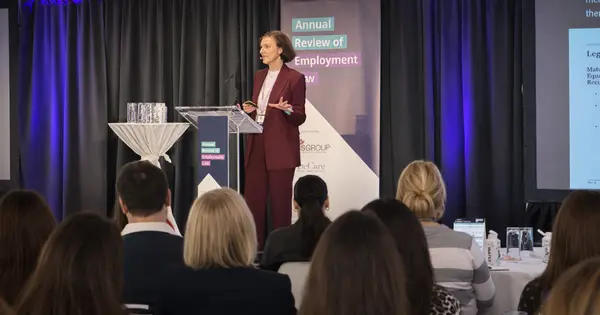
Caroline Reidy is Head of HR Solutions at NFP and a HR and Employment Law Specialist. Caroline sold her company, The HR Suite, in 2025 to NFP, an AON Company, and as of 17th November 2025 The HR Suite officially rebranded to NFP.
Caroline is a former member of the Low Pay Commission and is also an adjudicator in the Workplace Relations Commission. Caroline is also an independent expert observer appointed by the European Parliament to the Board of Eurofound. Caroline is also on the Board of the Design and Craft Council Ireland and is a Governor on the Board of Munster Technology University.
She has also completed a Master's in Human Resources at the University of Limerick, and she is CIPD accredited as well as being a trained mediator. Caroline completed her diploma in Company direction from the IOD with a Distinction and completed her assessment to become a Chartered Director of the IOD. Caroline had worked across various areas of HR for over 25 years in Kerry Group and in the retail and hospitality sector, where she was the Operations and HR Director of the Garvey Group prior to setting up The HR Suite in 2009.
She has also written 2 books, has done a TEDx and is a regular conference speaker and contributor to national media and is recognised as a thought leader in the area of HR and employment law. Caroline also mentored female entrepreneurs on the Acorns Programme. Originally from Ballyheigue, Co. Kerry, now living in Dublin, is very proud of her Kerry roots.
For many organisations, the Christmas party is an important opportunity to recognise employees, strengthen team relationships and mark the end of a busy year. However, from an employment law perspective, employers should treat the Christmas party as more than a social occasion. Where an event is organised, funded, promoted or otherwise connected to work, it may be regarded as an extension of the workplace, even if it takes place after hours and away from the employer’s premises.
This means that the standards expected during normal working hours should continue to apply at the festive event. Employers who fail to plan appropriately may face employee grievances, disciplinary issues, dignity at work complaints, equality claims, health and safety concerns or reputational
Continue reading
We help hundreds of people like you understand how the latest changes in employment law impact your business.
Please log in to view the full article.
What you'll get:
- Help understand the ramifications of each important case from NI, GB and Europe
- Ensure your organisation's policies and procedures are fully compliant with NI law
- 24/7 access to all the content in the Legal Island Vault for research case law and HR issues
- Receive free preliminary advice on workplace issues from the employment team
Already a subscriber? Log in now or start a free trial
 Practical Skills for Confronting & Preventing Conflict at Work
 Preventing and Resolving Bullying and Harassment in the Workplace